Freight Forwarding 101: Getting Cargo Through Nigerian Ports Faster
Most importers and exporters moving cargo through Nigerian ports didn't set out to work with several different vendors on a single shipment. It happened one decision at a time — a freight forwarder for the ocean leg, a separate clearing agent for documentation, a haulage company for inland transport, and often a different warehousing provider for storage. Each choice made sense in isolation. Together, they can produce a supply chain where no single party can tell you, with certainty, exactly where your cargo is or why it's stuck.
That's the real cost of fragmentation at the port — not the individual fees, but the accountability gap between the parties handling your goods.
The delay isn't usually at any one point. It's in the handoffs.
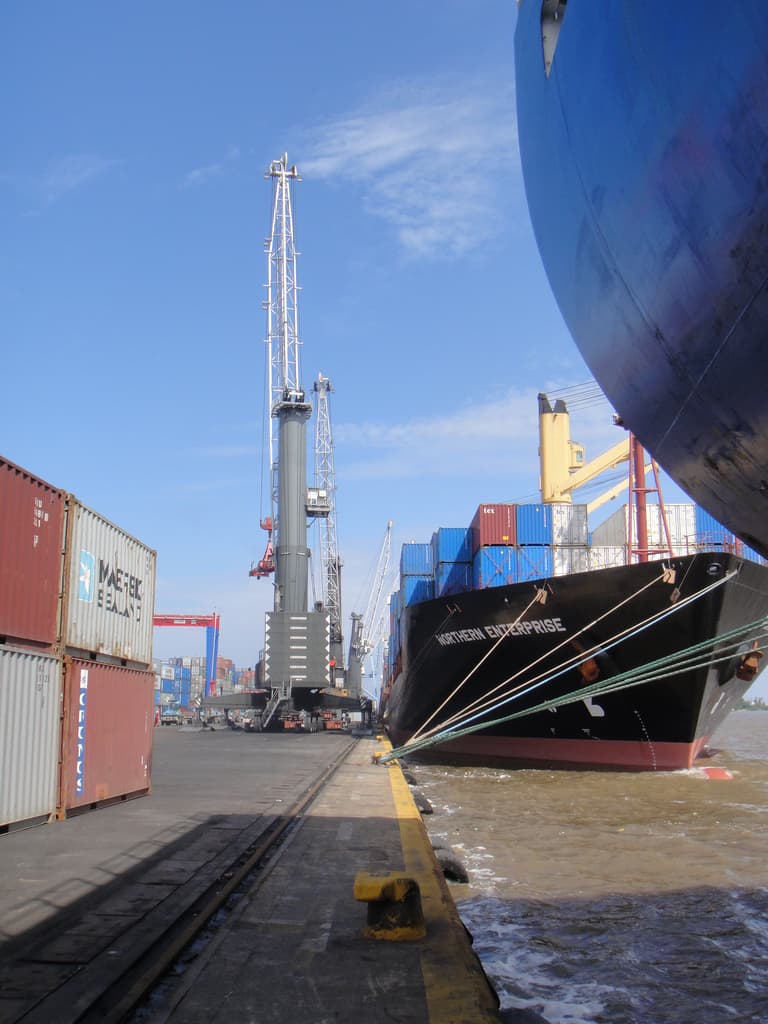
Talk to any importer who has had cargo sit at a Lagos terminal for two extra weeks, and the story is rarely "the forwarder failed" or "the terminal was slow." It's usually a sequence: documentation was ready, but the haulier wasn't booked in time. The haulier was booked, but nobody had confirmed the terminal's release schedule. No single vendor did anything wrong — the seams between them are where the time disappeared.
What good freight forwarding actually looks like
A freight forwarder worth using does more than book cargo space on a vessel. They coordinate the full chain of a shipment: booking, documentation, customs liaison, and the handoff to onward transport, tracking each stage so nothing sits waiting on a decision nobody has made yet. The value isn't in any single step — it's in nothing falling through the cracks between steps.
Three things that speed up clearance more than anything else
- Documentation prepared before the vessel arrives, not after. The single biggest cause of avoidable delay is documentation that only starts being reviewed once cargo is already at the terminal.
- Haulage booked against the actual release forecast, not arranged reactively once cargo is already cleared and sitting, racking up demurrage while a truck is found.
- One point of contact who can explain what's happening and why, rather than several vendors each pointing at the other when something is delayed.
Why this matters more as trade volumes grow
As import and export volumes through Nigerian ports continue to rise, and terminal congestion becomes a recurring operational reality, the cost of fragmentation compounds. A shipment that could absorb a loosely coordinated process in a slower trade environment cannot absorb the same inefficiency when berthing windows are tighter and every extra day at the terminal carries a real demurrage cost.
That's the case for coordinated freight forwarding and clearing — not because doing everything under one roof is automatically better, but because the alternative, coordinating specialists after cargo is already in motion, is where most of the actual risk and cost in Nigerian port logistics quietly lives.
Want to see where the gaps are in your current shipping process? Speak with our clearing & forwarding team and we'll walk through your cargo flow before recommending anything.
Ready to put this into action?
Speak with our team and we'll assess how our group can support your operation.
Speak to Our Team